 Click here to hear the call of this species (131 KB MP3 file)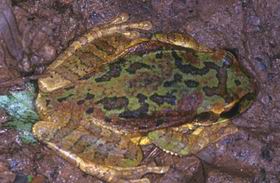
Click here to hear the call of this species (131 KB MP3 file)
Family: Hylidae
Common names: Mexican Treefrog / Baudin's Treefrog
1) Distinguishing features
Size (SVL) Males 55 - 65mm, females 70 - 85mm - one of the largest treefrogs along with P. venulosa, may be distinguished from this by its smoother skin and lack of stick glandular secretions. Dorsum colour is variable, tan, brownish, or pale green and may be uniformly coloured, but usually there are large irregular dorsal splotches that may be dark brown or olive-green. Capable of considerable metachrosis - may be completely different colour from night before when observed the next morning. A dark canthal stripe is present and a whitish, ash grey, or lime green spot usually occurs between the lower posterior of the eye and the margin of the upper lip. Dark transverse limb bars are present. The venter is mostly white. The iris is gold above and brown below.
2) Distribution
The most abundant and ubiquitous frog on the Yucatan Peninsula. Known from all vegetation formations in Belize except the Subtropical Evergreen Forest and Elfin Forest formations.
3) Natural history
Frequently encountered in disturbed situations. During dry season stay in the forest in bromeliads, loose tree bark and other hiding places. Breeding extends most of the way through the rainy season, and one can almost always hear their distinctive wonk-wonk-wonk calls from shrubs, small trees and the edges of temporary bodies of water. Any quiet temporary water body seems to suffice for breeding. Eggs form film on the top of water.
4) Remarks
One of the most common anurans in Belize, and likely to be encountered in populated areas including Belize City.