 Click here to hear the call of this species (134 KB MP3 file)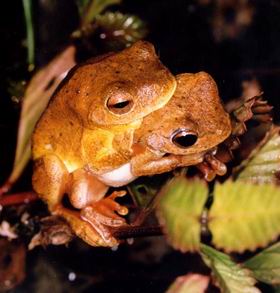
Click here to hear the call of this species (134 KB MP3 file)
Family: Hylidae
Common names: Loquacious Treefrog / Red-footed Treefrog
1) Distinguishing features
Size (SVL) 36 - 43mm, males usually larger than females
Dorsum is yellowish, reddish brown, brownish or greyish, often with dark flecks, and the limbs lack transverse bars characteristic of many frogs. Venter is cream or yellowish. The hidden surfaces including the axilla, groin, anterior and posterior surfaces of the thighs, and the inner surfaces of the tarsi are bright orange-red, as is the webbing of the fingers and toes. Iris is reddish tan. Snout is broadly rounded in dorsal profile and the dorsal skin is minutely corrugated. Forelimbs moderately long and robust with extensive axillary membrane reaching the elbow. Digits have well-developed discs, fingers are two thirds webbed, and toes nearly fully webbed. Weak tarsal fold extends from the inner metatarsal tubercle for about a third of the distance of the tarsus.
2) Distribution
Near sea level to 300m. Found during rainy season in and temporary and permanent pools in the forests and savannahs. Occurrence in the savannah limited to pools with 'islands' of broadleaf forest nearby.
3) Natural history
During dry season have been found in epiphytes found high in trees. One of the last frogs to appear at the beginning of the rainy season - needs about a dozen soakings before induced to breed. Males call from low vegetation, often far out in the deeper parts of the ponds or aguadas. Eggs deposited in clumps, up to 250 eggs, attached to submerged vegetation. Breeding normally restricted to deeper bodies of water. Call is series of notes that have been likened to the honking of a goose.